


Our Intellectual heritage

Lantern House stands in the Augustinian stream that flows through the Magisterial Reformation — Luther's theology of vocation, Calvin's conviction that all truth belongs to God, the Heidelberg Catechism's existential anchor — and into a remarkable set of twentieth-century thinkers who diagnosed the modern crisis with uncanny precision.

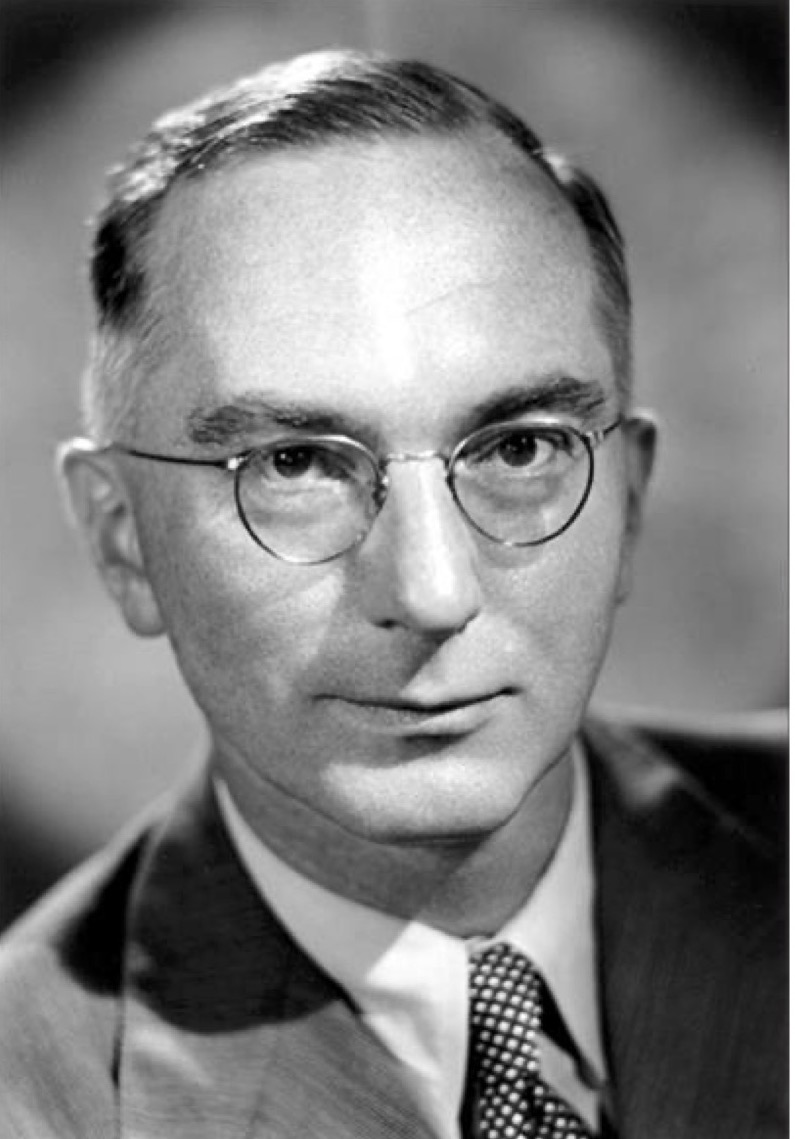
Harry Blamires
1916–2017

His 1963 masterwork The Christian Mind opened with a hammer blow: "There is no longer a Christian mind." Lantern House exists, in part, to answer exactly the call Blamires made.

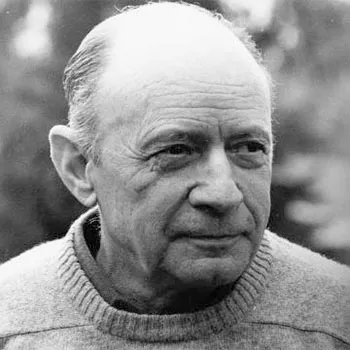
Eric Voegelin
1901–1985

The German-American philosopher who showed that modernity's crisis is fundamentally a crisis of order — and that when civilization closes itself to transcendence, it becomes gnostic, not neutral.

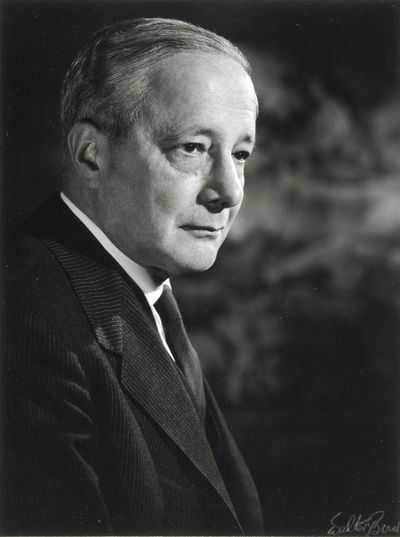
Jacques Ellul
1912–1994

The French Reformed theologian who diagnosed la technique — the totalizing logic of efficiency that reduces human beings to functions within systems, including the church's own life.

Michael Polanyi
1891–1976

His concept of personal knowledge demonstrated that all knowing — including scientific knowing — involves an irreducible personal dimension. Truth is known through committed participation, not detached observation.

Alasdair MacIntyre
1929–2025

His 1981 After Virtue delivered the most devastating critique of modernity's moral incoherence. Lantern House is, in a sense, a MacIntyrean institution: a practice-based community embedded in a tradition of inquiry.

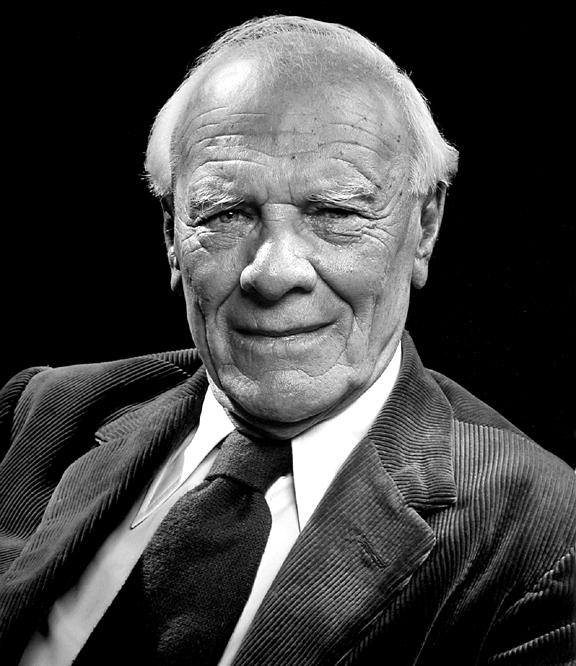
Malcolm Muggeridge
1903–1990

The British journalist whose late Christian writings combine devastating cultural criticism with a convert's passionate clarity — and whose life reminds us that prophetic witness is not the same as political activism.

These twentieth-century voices are not rootless. They belong to a stream that begins with Augustine of Hippo, who first demonstrated that the life of the mind and the life of faith are not competitors but companions. Augustine’s Confessions showed that the search for truth is simultaneously an intellectual and a spiritual journey—that philosophy, rightly pursued, leads toward God, not away from him. His City of God provided the first comprehensive Christian interpretation of history, politics, and culture that did not require the church to seize temporal power in order to speak with authority.

This Augustinian inheritance was taken up and transformed by the Magisterial Reformers. Luther’s doctrine of vocation taught that every honest calling—cobbling shoes, governing cities, raising children—is a place where God’s purposes are served. Calvin’s theology of creation affirmed that all truth, wherever it is found, belongs to God, and that the Christian has nothing to fear from honest inquiry. The Heidelberg Catechism’s opening question—“What is your only comfort in life and in death?”—established the existential ground on which all subsequent Reformed theology stands: the conviction that every human being belongs, body and soul, to a faithful Savior.

Lantern House stands in this stream. We draw from Blamires, Voegelin, Ellul, Polanyi, MacIntyre, and Muggeridge not as novelties but as contemporary voices in a conversation that has been going on since Augustine dictated the Confessions in 397 AD. We also gratefully receive the contributions of Nicene professors such as C. S. Lewis, Francis Schaeffer, Lesslie Newbigin, Wendell Berry, Marilynne Robinson, Walker Percy, and many others who have enriched this tradition without exhausting it.

Lantern House Timeline

A lineage of wonder
in Lawrence, Kansas

Lantern House stands in a long tradition of Christian intellectual life rooted in this place — each chapter leaving behind relationships, ideas, and hunger that make the next one possible.

The Integrated Humanities Program

John Senior, Dennis Quinn, and Frank Nelick launched a two-year Great Books curriculum at the University of Kansas unlike anything in American higher education. Students memorized poetry, waltzed, stargazed, and read Homer, Virgil, Plato, Augustine, and Dante — not as historical artifacts but as living voices. The results were explosive: remarkable numbers came to Christian faith. Shut down in 1979 by administration after media coverage of the conversions, despite investigators finding no evidence of classroom proselytizing.

The Alethia Forum

A group of Christians in the Lawrence area organized a short-lived but significant space for serious intellectual and cultural engagement. The Forum brought together pastors, academics, and laypeople for conversations spanning faith, culture, and civic life. Though it did not survive as an institution, it left behind a network of relationships and a demonstrated hunger for the kind of work Lantern House intends to do.

The New Pantagruel

Editor Caleb Stegall — Lawrence attorney, lifelong Kansas Presbyterian, now a Kansas Supreme Court Justice — founded a genuinely original journal rooted in place, tradition, and the agrarian insights of Wendell Berry. It attracted national attention, was featured in Rod Dreher's Crunchy Cons and profiled on the front page of the New York Times. In 2007, the editors deliberately shut it down to return to "the particularities of our places and people."

Signs of Life

For twenty years, Clay Belcher's bookstore, espresso bar, and art gallery occupied 722 Massachusetts Street — a prototype for what Lantern House's downtown center aspires to be. Thoughtful books, rotating fine art exhibitions, quality coffee, and a welcoming space that drew families, students, artists, and scholars alike. Its 2023 closure upon Belcher's retirement left a gap in Lawrence's cultural landscape that Lantern House is designed to fill.

The Oread Center

A member of the Consortium of Christian Study Centers, affiliated with Grace Evangelical Presbyterian Church, the Oread Center received a portion of a $4 million Lilly Endowment grant in 2014 and conducted programming focused on vocation and calling. Though its activities have diminished in recent years, its existence demonstrated the viability of a Christian study center model at KU and left behind institutional knowledge, community relationships, and donor networks for Lantern House to build upon.